
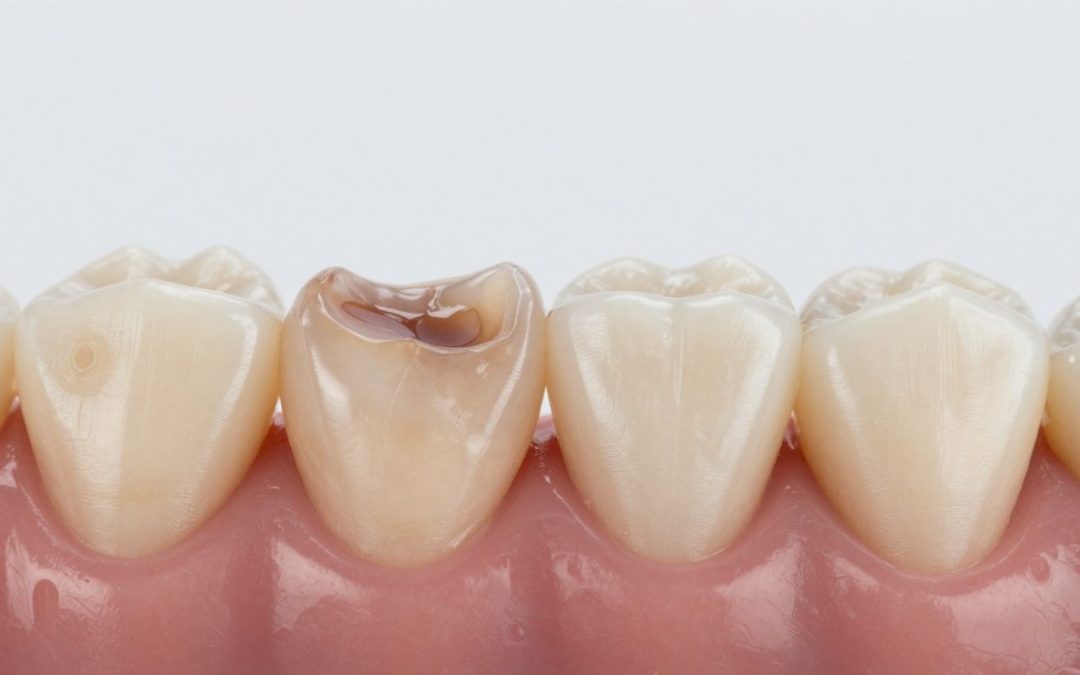
Tooth decay doesn’t just appear out of nowhere. It’s a process, and understanding the different stages of tooth decay can really help you catch problems early. Think of it like a slow leak in your house – you want to fix it before it causes major damage. We’ll walk through how decay starts, what happens as it gets worse, and what you might notice along the way. Knowing these stages means you can be more aware and take steps to protect your smile.
Understanding Tooth Decay: A Gradual Process
Tooth decay isn’t something that just happens all of a sudden. It’s a slow process, and understanding how it progresses is key to catching it early. Think of it like rust on metal; it starts small and, if left alone, can spread and cause significant damage. The whole thing kicks off when certain bacteria in your mouth, which love the sugars and starches we eat, start producing acids. These acids are the real culprits. They begin to eat away at the hard outer layer of your teeth, called enamel. This initial weakening is the very first step in the whole tooth decay stages journey.
The process involves a constant battle between acid attacks and your mouth’s natural defenses.
Here’s a simplified look at how it unfolds:
- Acid Production: Bacteria feast on sugars and starches, creating acids.
- Demineralization: Acids attack the enamel, stripping away minerals.
- Remineralization: Saliva works to neutralize acids and redeposit minerals.
- Cavity Formation: If acid attacks happen more often than your saliva can repair the damage, the enamel breaks down, forming a hole.
This gradual breakdown means there are multiple points where intervention can stop the damage. Recognizing the early signs is super important for effective tooth decay treatment stages. It’s not just about pain; sometimes, the earliest signs are subtle changes you might not even notice without a dentist’s help.
So, while it might seem like a simple cavity, it’s actually the result of a prolonged chemical process happening right inside your mouth. Being aware of these tooth decay stages helps you take better care of your teeth.
Stage 1: Early Enamel Demineralization – The Invisible Beginning
What Happens During Demineralization?
So, how does a cavity even start? It’s not like a sudden hole appears overnight. It’s actually a gradual process, and the very first step is something called demineralization. Basically, the hard outer layer of your teeth, the enamel, starts to lose minerals. This happens because of acids. Where do these acids come from? Well, the bacteria that naturally live in your mouth love to feed on sugars and starches from the food and drinks you consume. When they eat these things, they produce acids as a byproduct. These acids then attack your enamel. Your saliva does try to help by neutralizing the acids and putting minerals back, a process called remineralization. But if the acid attacks happen more often than your saliva can keep up, the enamel starts to weaken.
Early Signs and Symptoms
This first stage is tricky because, honestly, you probably won’t notice anything is wrong. There’s usually no pain, no sensitivity, and no visible change to your teeth. It’s completely silent. The only real clue might be the appearance of faint, chalky white spots on the tooth’s surface. These spots show up where the minerals have been leached out. They often show up near the gum line or in between teeth, places where plaque tends to hang out. The good news is that at this stage, the enamel surface is still intact, and the damage can often be reversed. If you improve your brushing habits, cut back on sugary snacks, and maybe use a fluoride toothpaste, your enamel can actually rebuild itself. It’s like giving your teeth a chance to heal before any real damage is done. Getting regular checkups is super important because your dentist can spot these early signs during a routine exam, even when you can’t feel or see them. It’s the best time to make changes that can prevent the problem from getting worse.
Stage 2 – Enamel Decay and Cavity Formation
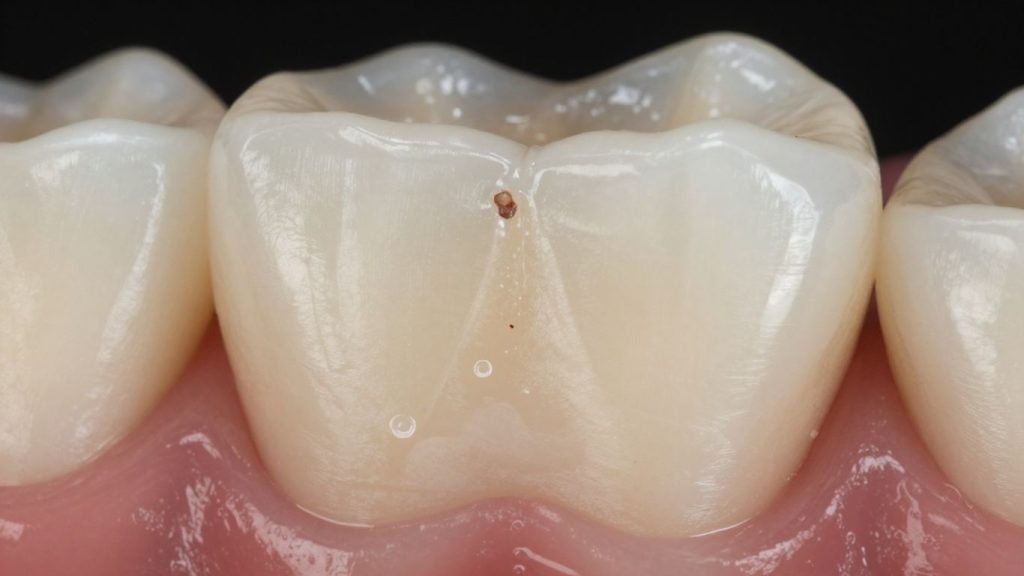
So, you’ve made it past the invisible stage where minerals were just starting to leave your enamel. Now, things are getting a bit more serious. This is where the enamel, the tough outer shell of your tooth, actually starts to break down. Think of it like a tiny crack in a wall that’s starting to spread.
Appearance of White Spots
At the very beginning of this stage, you might notice those chalky white spots we talked about earlier. These aren’t just surface stains; they’re areas where the enamel has lost minerals and is becoming weaker. They often show up near the gum line or between teeth, places where plaque likes to hang out. The enamel surface is still mostly intact, so there’s no actual hole yet. It’s kind of like a warning sign that your tooth’s defenses are down.
Progression to Brown Spots and Cavities
If the demineralization continues, those white spots can start to change. They might darken, turning into brown or even black spots. This is a clear sign that the decay process is advancing. Eventually, the weakened enamel will actually break, creating a small hole in the tooth – this is what we call a cavity.
Here’s a quick look at how the stages of cavities in teeth progress:
- White Spots: Initial mineral loss, enamel surface intact.
- Brown Spots: Decay is advancing, and enamel is weakening.
- Cavity Formation: Enamel breaks down, forming a small hole.
At this point, the decay is still limited to the enamel. You might not feel any pain yet because there are no nerves in the enamel itself. This is why regular dental checkups are so important; dentists can spot these early stages of cavities in teeth using visual checks and X-rays, often before you even notice a problem. Treatment at this stage usually involves a simple filling to remove the decayed part and restore the tooth’s surface. It’s the last chance to fix the issue without needing more involved procedures.
Stage 3: Dentin Decay – Reaching Deeper Layers
Okay, so the decay has made it past the tough outer shell of your enamel. Now it’s gotten into the dentin, which is the layer right underneath. Think of dentin as the main body of your tooth, and it’s a lot softer and more porous than enamel. This means the decay can spread much faster here. It’s kind of like a wildfire compared to a slow burn.
Symptoms of Dentin Involvement
When decay hits the dentin, things start to get noticeable. You might begin to feel it. Here’s what to look out for:
- Temperature sensitivity: Suddenly, that ice-cold drink or piping hot coffee might send a jolt through your tooth. This is because the dentin has tiny tubes that lead directly to the tooth’s nerve center. When these tubes are exposed or irritated by decay, you feel it.
- Pain with sweets: Just like with temperature changes, sugary foods and drinks can trigger a sharp, unpleasant sensation.
- Visible changes: You might notice a hole or a pit forming in the tooth. The color might also change, often appearing darker than the earlier white spots, sometimes a brownish or even blackish hue.
- Discomfort when biting: Putting pressure on the tooth while chewing can also become painful.
At this point, a simple fluoride treatment won’t cut it anymore. The damage is too significant. Dentists usually need to remove the decayed part and fill the hole. Depending on how much of the tooth structure is lost, you might need a filling, or in more serious cases, a crown might be necessary to properly restore and protect the tooth. It’s really important to get this checked out because if it’s left untreated, it’s heading towards the tooth’s nerve, which is a whole other level of trouble. You can learn more about the progression of decay to understand how serious this stage can become.
Stage 4 – Pulp Damage and Tooth Infection
Symptoms of Pulp Involvement
So, you’ve made it to stage four. This is where things get serious because the decay has finally burrowed its way into the tooth’s pulp. Think of the pulp as the tooth’s core – it contains the tooth’s nerves and blood vessels. When bacteria get in there, it’s like a party nobody invited them to, and they start causing a whole lot of trouble.
The most common sign you’ve reached this stage is a persistent, throbbing toothache. It’s not just a little twinge; this pain can be quite intense and might even spread to your jaw, ear, or head. You’ll probably notice extreme sensitivity to anything hot or cold, and biting down can feel like a real problem. It’s your body’s way of screaming that something is very wrong inside.
Here’s what you might experience:
- A deep, aching pain that doesn’t go away easily.
- Pain that gets worse when you lie down.
- Temperature sensitivity that lingers long after the stimulus is gone.
- Pain when you chew or put pressure on the tooth.
Treating pulp damage usually means that root canal therapy is needed. This procedure cleans out the infected pulp, disinfects the inside of the tooth, and then seals it up. Often, a crown is placed afterward to protect the tooth. It sounds scary, but it’s the best way to save the tooth and get rid of that awful pain. Ignoring it can lead to even bigger problems down the road, like an abscess, which is a whole other level of serious.
Common Signs You May Have Tooth Decay
Sometimes, tooth decay doesn’t announce itself with a big, dramatic toothache. It can be pretty sneaky, actually. You might not even realize something’s up until it’s progressed a bit. So, what are some of the more common things to watch out for?
- Sudden sensitivity to hot, cold, or sweet things. That jolt you get when sipping iced coffee or biting into a piece of fruit? That could be a sign your enamel is weakening.
- Visible spots on your teeth. These often start as small white patches, which might look like a chalky residue. As decay gets worse, these spots can turn brown or even black.
- Pain when you bite down. This is a more serious indicator. It could mean the decay has reached deeper layers of the tooth, or there might be a crack.
- A persistent ache or throbbing. While early decay might be silent, later stages can bring on a dull ache or even sharp, shooting pains.
- Bad breath or a bad taste in your mouth. Bacteria causing decay can also lead to unpleasant odors and tastes that don’t go away with brushing.
It’s easy to brush off these little signals, thinking it’s just a fluke. But paying attention to these early signs of tooth decay is super important for catching problems before they become major issues.
How Dentists Diagnose Tooth Decay
So, how does a dentist actually figure out if you’ve got a cavity brewing? It’s not always as simple as just looking in your mouth, though that’s definitely the first step. Dentists have a few tricks up their sleeves to catch decay, especially in those early stages when you might not even feel it.
First off, there’s the visual check. Your dentist will carefully examine every surface of every tooth, looking for any color changes, like those chalky white spots or darker brown areas we talked about. They’re trained to spot these subtle signs of enamel breakdown. Sometimes, they’ll use a little explorer tool – that pointy thing they poke around with – to feel for any rough spots or stickiness on the tooth surface, which can indicate decay.
But that’s not all. They often use X-rays, too. These are super helpful for seeing decay that’s hiding between your teeth or even under existing fillings. It’s amazing what those images can reveal! They can also use special lights or dyes that highlight areas where decay has started. It’s all about getting the clearest picture possible.
Here’s a quick rundown of what they might do:
- Visual Examination: Looking for color changes, spots, or rough areas.
- Dental Explorer: Gently probing tooth surfaces for irregularities.
- X-rays (Radiographs): To detect decay between teeth and under restorations.
- Transillumination: Using light to highlight decay.
- Dental Lasers: Some modern tools can detect decay by measuring changes in the tooth structure.
At Constitution Dental, our Ottawa dental team provides preventive, restorative, and emergency dental care to help patients treat cavities and maintain healthy smiles.
Conclusion
So, we’ve walked through the whole journey of tooth decay, from those sneaky early white spots to the really serious stuff like pulp damage and infections. Ignoring dental issues isn’t the way to go. The earlier you catch decay, the simpler and less invasive the treatment will be. If you notice early signs of tooth decay, visiting an Ottawa dentist early can help prevent serious damage.
Frequently Asked Questions
What exactly is tooth decay?
Tooth decay is basically when the parts of your tooth get damaged. It happens because tiny germs in your mouth, called bacteria, eat the sugars from your food and make acids. These acids are like little drills that slowly eat away at your teeth, starting with the outer layer.
Can tooth decay be reversed?
Yes, in the very beginning stages, tooth decay can be reversed! When it’s just starting and you see a white spot, using fluoride and brushing really well can help your tooth rebuild itself. But once a hole forms, it needs a dentist to fix it.
How long does it take for a cavity to form?
Cavities don’t just pop up overnight. It’s a slow process that can take months or even years. It depends on how often you eat sugary things, how well you clean your teeth, and how strong your saliva is at fighting off the acid.
What’s the difference between enamel decay and dentin decay?
Enamel is the super hard outer shell of your tooth. When decay is only in the enamel, it might just look like a white or brown spot, and you might not feel any pain. Dentin is the softer layer underneath. Once decay reaches the dentin, it moves faster, and you’ll likely start feeling sensitivity or pain because the dentin is closer to the tooth’s nerve.
When should I see a dentist about tooth decay?
You should see a dentist if you notice any white or brown spots on your teeth, feel any sensitivity to hot, cold, or sweet things, or have any tooth pain. Even if you don’t feel anything, regular dental checkups are super important to catch decay early.
How can I prevent tooth decay?
To prevent tooth decay, brush your teeth at least twice a day with fluoride toothpaste, floss every day to clean between your teeth, and try to limit sugary snacks and drinks. Visiting your dentist regularly for checkups and cleanings is also a big help!